For years the same question has come up on this forum in a hundred different forms: the pills stopped working, now what?
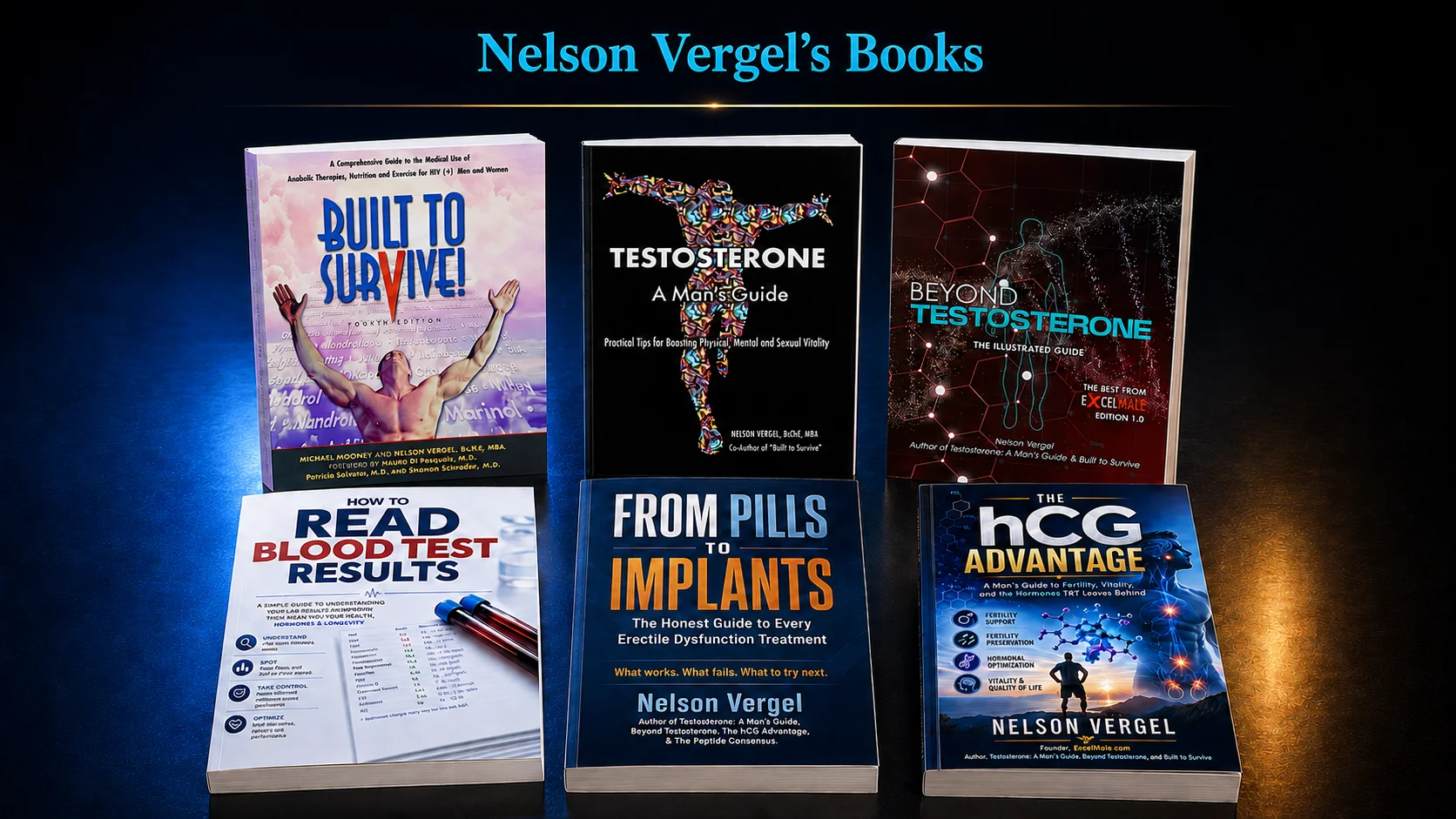
I finally wrote the full answer down. My new book, From Pills to Implants: The Honest Guide to Every Erectile Dysfunction Treatment, comes out soon.
It walks through every ED treatment that actually exists, in order, from first-line pills to injections, vacuum devices, hormones, PT-141, shockwave, and implants. For each one it grades the evidence honestly and names the risks plainly. No miracle cures, no hype.
A few things inside that this community shaped directly:
Launches September 1, 2026 on Amazon.com. I'll post the direct link here the day it goes live.

________________________________


This book is an educational guide written in lay language about diagnosing, understanding, and treating erectile dysfunction through various medical and lifestyle approaches.
Understanding Erectile Dysfunction
I finally wrote the full answer down. My new book, From Pills to Implants: The Honest Guide to Every Erectile Dysfunction Treatment, comes out soon.
It walks through every ED treatment that actually exists, in order, from first-line pills to injections, vacuum devices, hormones, PT-141, shockwave, and implants. For each one it grades the evidence honestly and names the risks plainly. No miracle cures, no hype.
A few things inside that this community shaped directly:
- Why about 70% of ED is a blood-flow problem, and why testosterone alone rarely fixes it
- The venous-leak diagnosis most doctors never mention
- Trimix injection technique and dose-finding, written for men who actually do it
- How common medications quietly wreck erections
- What penile implants really involve, and how to find a high-volume surgeon
- Member comments quoted throughout, with your forum handles, because your experience belongs in a book like this
Launches September 1, 2026 on Amazon.com. I'll post the direct link here the day it goes live.
________________________________
This book is an educational guide written in lay language about diagnosing, understanding, and treating erectile dysfunction through various medical and lifestyle approaches.
Understanding Erectile Dysfunction
- ED is the inability to get or maintain a satisfying erection, with a focus on consistency.
- Over 50 million men in the U.S. are affected, with physical causes dominating in older men.
- About 70% of organic ED results from blood flow issues like atherosclerosis, diabetes, or hypertension.
- Erectile problems often precede heart disease by roughly three years, serving as a warning sign.
- Treatments range from pills to implants, starting with least invasive options.
- Proper measurement using tools like the IIEF score is essential to track progress and determine effectiveness.
- Psychological factors like anxiety and depression contribute, especially in younger men.
- Other causes include nerve damage, structural issues, medication effects, and hormonal imbalances.
- Erection failure with partner suggests psychological or situational causes.
- Sudden onset indicates psychological triggers or medication effects, gradual decline points to vascular disease.
- Penile duplex Doppler ultrasound measures blood flow; PSV >30-35 cm/s is normal.
- Self-assessment over weeks helps identify patterns and guides targeted treatment.
- Key tests include testosterone, estradiol, prolactin, TSH, and free T4.
- Correcting hormonal imbalances can improve desire and response to therapy.
- SSRIs, beta blockers, diuretics, and certain drugs impair erections.
- Switching to alternatives like bupropion or adjusting doses can restore function.
- Regular aerobic exercise, weight loss, and smoking cessation improve vascular health.
- Managing sleep apnea and blood sugar levels reduces ED risk.
- Performance anxiety and depression can cause or worsen ED.
- Therapy, relationship counseling, and stress management often reverse dysfunction.
- Non-responders may need injections or mechanical devices.
- Venous leak and vascular issues require specialized diagnostics and downstream therapies.
- Verify licensing, FDA registration, third-party testing, and ingredient sources before choosing a pharmacy.
- Sterility testing is critical for injectables to prevent serious infections.
- Vacuum erection devices create negative pressure to induce an erection, suitable for men unable to take PDE5 inhibitors.
- Constriction rings help maintain erections by slowing venous outflow; they should not stay on longer than 30 minutes.
- Intracavernosal injections like Trimix are highly effective, with success rates above 80% after proper dose finding.
- Proper technique involves site rotation, using fine needles, and avoiding veins or the urethra to prevent complications.
- Priapism lasting over four hours is a urological emergency risking tissue damage.
- Use pseudoephedrine or ice packs as interim measures before urgent hospital treatment.
- Testosterone levels should be confirmed with morning tests; aim for 500-1000 ng/dL.
- Managing estradiol, prolactin, and DHT is essential; over-suppression causes adverse effects.
- Low-intensity shockwave therapy shows modest, temporary benefits mainly for mild to moderate vasculogenic ED.
- Emerging therapies like PRP, stem cells, and gene therapy lack strong evidence and are mostly investigational.
- Implants are for men with severe ED unresponsive to other treatments, with inflatable devices offering natural results.
- Choice of device depends on anatomy, with two main manufacturers providing reliable options.
- The device replaces hydraulic function, not sensation, orgasm, or ejaculation.
- It does not fix low libido, hormonal issues, depression, or relationship problems.
- Displacing erectile tissue causes permanent loss of natural erections.
- Pre-surgical counseling and partner involvement are essential for acceptance.
- Implants do not shorten the penis; atrophy from untreated disease is often mistaken for length loss.
- The 2026 Titan Prime offers stronger cylinders, durable tubing, easier pump, and finer length adjustments.
- Risks include infection (<1%), mechanical failure, glans ischemia, erosion, and urethral injury.
- High-volume centers have complication rates under 5%, with better results.
- Regular cycling post-surgery maintains tissue pliability.
- Proper technique and patience improve long-term function and satisfaction.
- Patient satisfaction ranges 92-98%; device longevity is 70-85% at 15 years.
- Surgeons performing >50 implants annually have better outcomes.
- New devices with internal batteries or shape-memory alloys are in development.
- Insurance coverage is common; the device can be less costly than ongoing treatments.
- Peyronie’s causes curvature; surgery is for stable disease.
- Men often experience psychological distress; partner involvement improves outcomes.
- Implants restore mechanics but do not affect desire or hormonal issues.
- Address underlying causes like hypogonadism, medications, or psychological factors first.
- Selective alpha-1A blockers like silodosin and tamsulosin cause anejaculation by impairing emission.
- In studies, silodosin produced anejaculation in all participants, reversing within days after stopping.
- Surgery (prostatectomy, radiation) and nerve injury often cause permanent or temporary ejaculatory issues.
- Aging, medications, and health conditions like diabetes can reduce semen volume and orgasm intensity.
- Changing medications usually restores ejaculation; switching to non-selective alpha blockers helps.
- Men with fertility concerns can recover sperm from post-orgasm urine for assisted reproduction.
- Nerve-sparing surgery and early tissue oxygenation via vacuum or injections improve recovery.
- Waiting beyond two years with persistent issues suggests moving to implants or injections.
- SSRIs, finasteride, and isotretinoin can cause persistent sexual side effects after discontinuation.
- Men should be informed beforehand; treatment options are limited and not well-established.
- Men report using cabergoline for orgasm enhancement; prolactin levels are crucial.
- Proper medication trials, baseline assessments, and early intervention improve outcomes.
- Includes checklists for conditions like diabetes, heart disease, cancer, and allergies.
- Family history covers heart attack, diabetes, cancer, and kidney disease.
- Uses IIEF-5 score to evaluate ED severity from no ED to severe.
- Details previous treatments and responses, including medications and devices.
- Recommends licensed therapists for psychogenic ED.
- Covers sleep quality, stress levels, smoking, alcohol, and substance use.
- Lists current medications, supplements, and experimental compounds.
- Asks about hormone use, cycles, and past therapies.
Last edited: