
The American College of Sports Medicine just released its first update to the resistance training guidelines in 17 years. The senior author is here to break it all down.
Dr. Spencer and Dr. Karl sit down with Dr. Stuart Phillips, senior author of the new ACSM Position Stand on resistance training, to cut through the noise and get back to what the science actually says about lifting weights.137 systematic reviews. Over 30,000 participants. And the answer, more often than not, is simpler than the internet wants you to believe.
They cover everything from how many days a week you actually need to lift, whether rep ranges really matter for hypertrophy, why gardening is somehow listed as a strengthening activity in public health guidelines, and what power training has to do with not falling down when you get older.
If you have patients, clients, or friends who are confused about how to build a lifting program, this is the episode to send them.
What you'll learn:
* Why the ACSM updated its resistance training guidelines after 17 years
* How many days per week and sets per muscle group actually move the needle
* The real rep range for hypertrophy and why 8 to 12 is not the only answer
* Why you need to lift heavy if you want to get stronger, full stop
* What power training is and why it matters more as you age
* Eccentric training, blood flow restriction, and length partials explained simply
* Why periodization might not matter as much as people think for most people
* The biggest barrier to resistance training and how to lower it

Timestamps
0:00 – Intro and Meet Dr. Stuart Phillips, Senior Author of the ACSM Position Stand
1:09 – Why Update the Guidelines After 17 Years?
2:30 – Social Media Misinformation and Why Evidence Based Guidelines Matter Now
4:03 – How the Review Was Done, 137 Systematic Reviews and 30,000 Participants
6:00 – Lifting Weights Makes You Stronger, What Else Did We Learn?
7:28 – The 2009 Guidelines vs 2026, What Actually Changed
9:23 – Who Are These Guidelines Actually For?
10:04 – Gardening Is Listed as a Strengthening Activity and We Have Questions
11:02 – Pilates, Yoga and Body Weight, Where Do They Fit?
12:20 – The Top Takeaways, Starting With Rep Ranges
13:07 – If You Want to Get Stronger You Have to Lift Heavy, Full Stop
14:09 – Hypertrophy Happens Across a Much Wider Rep Range Than We Thought
15:08 – Lighter Weights Build Muscle But Do Not Build a Higher Max
16:18 – Lowering Barriers, How to Get People to Actually Start
18:05 – Equipment Matters Less Than You Think, Dumbbells, Bands, Machines All Work
19:29 – A Patient Focused Approach to Starting Resistance Training
20:36 – How Many Days Per Week Do You Actually Need to Lift?
22:24 – Full Body vs Split Training, What Works for Most People
24:00 – The Simplest Effective Workout You Can Do in 20 Minutes
26:32 – How Many Sets Per Muscle Group for Hypertrophy
28:42 – Circuit Training, Supersets and Rest Periods
29:56 – Periodization, Is It Actually Necessary for Most People?
32:30 – Volume, Sessions Per Week and When Diminishing Returns Set In
34:26 – Power Training, Why It Matters More as You Get Older
37:52 – Eccentric Training and Whether Negatives Are Worth It
43:28 – Time Under Tension, Does It Actually Matter?
44:28 – Blood Flow Restriction, Niche Tool or Useful Strategy?
47:50 – Final Thoughts and Where to Follow Dr. Stuart Phillips
Curated By Nelson Vergel | ExcelMale.com | Updated May 2026
The Position Stand, published in the April 2026 issue of Medicine and Science in Sports and Exercise, synthesized 137 systematic reviews representing more than 30,000 participants. The senior author, Dr. Stuart Phillips of McMaster University, described the core message simply: the best resistance training program is the one you will actually stick with.
For men on testosterone replacement therapy (TRT), this update is particularly relevant. TRT creates an enhanced anabolic environment that amplifies the muscle-building response to resistance training. Getting the training right - or at least good enough and consistent - translates directly into better body composition, insulin sensitivity, strength, and long-term function. This article breaks down the key findings and explains what they mean for your training.
The 2026 update was conducted as an overview of systematic reviews rather than a study-by-study meta-analysis. That means the researchers evaluated the highest tier of evidence: reviews that had already synthesized individual studies. With six expert reviewers and 137 qualifying systematic reviews, this is the most rigorous treatment of resistance training science ever assembled into a clinical guideline.
Dr. Phillips also acknowledged the social media context: a proliferation of influencers selling complex programs has made it harder for ordinary people to identify what the actual evidence supports. Guidelines grounded in systematic review help separate signal from noise.
• One session per week is dramatically better than zero. If that is all you can manage, do it.
• Two sessions per week produces substantially better results than one session. This is the minimum most men should target.
• Three sessions per week is better than two, but the added benefit is modest enough that it should not be treated as mandatory.
Dr. Phillips put it bluntly: you get a lot of the benefit by going from once to twice a week. The incremental return from a third session exists, but it is not the leap that going from zero to one session represents.
For men on TRT managing busy schedules, two well-executed full-body training sessions per week - a Tuesday/Thursday split, for example - captures the large majority of the available benefit. You do not need six days in the gym to make meaningful progress.
The reason comes down to the fundamental stimulus for hypertrophy: mechanical tension on the muscle. Whether that tension comes from a loaded barbell or a resistance band pulling against your arm, the muscle experiences it the same way. Equipment specificity matters at the elite level - if you want to compete in powerlifting, you need to practice with a barbell. But for the men in the ExcelMale community who want to optimize body composition and functional strength on TRT, the message is freeing. Use what you have access to and actually enjoy.
Dr. Phillips cited the work of fitness coach Sheryl Coulombe, who has helped hundreds of women transform their physiques using only a small set of dumbbells at home. The principle transfers equally to men. Lowering the barrier to entry - skipping the commute to the gym on a hectic week and doing a session at home with bands - beats skipping the session entirely.
The evidence now supports hypertrophy across a much broader rep range, from roughly 5 reps at the heavier end up to 25 to 30 reps with lighter loads - provided you train close to muscular failure. The caveat is important. You do not have to reach absolute failure on every set, but you need to work within a few reps of it. If you can easily do 5 more reps at the end of your set, you likely have not provided sufficient stimulus.
Dr. Phillips described it as a proximity-to-fatigue model. The specific rep count matters less than how hard you are working relative to your limit. Someone doing 20 reps with a lighter weight, stopping when they could only manage 1 or 2 more, is providing a comparable hypertrophic stimulus to someone doing 8 reps with a heavier weight near the same relative effort.
Hypertrophy (muscle size) can occur across a wide rep range. Strength - specifically the ability to lift heavier maximum loads - requires practicing heavier loads. The reason is partly neurological. Strength is a skill. Your nervous system learns to coordinate motor unit recruitment and firing patterns to move heavy weight. If you train exclusively with lighter loads, you do not practice that skill.
Dr. Phillips used a simple analogy: if you lift at 20 repetitions using 60 percent of your one-rep max, you are nowhere near practicing that maximum. You will get bigger muscles that are less efficient at expressing maximum force. If your goal is a stronger max deadlift or squat, heavier training is not optional.
For men on TRT, this distinction matters. Many men join the ExcelMale community specifically to improve body composition - adding muscle and reducing fat. Hypertrophy-focused training with moderate to heavier loads (roughly 65-80% of your one-rep max) hits both goals: sufficient load to drive strength adaptation and enough volume to drive muscle growth. You do not need to exclusively powerlift, but periodically pushing into the heavier rep ranges (5-8 reps near failure) keeps your strength progressing alongside your size.
Getting up from a chair is a power movement. Catching yourself when you slip on ice is a power movement. Correcting a stumble before it becomes a fall requires fast, coordinated muscle activation that neither slow, heavy lifting nor light endurance work specifically trains.
The Position Stand supports power development with relatively light to moderate loads (20 to 70 percent of your one-rep max) moved with intentional speed during the concentric (lifting) phase. The coaching cue is to move the weight as fast as you can with control - not to reduce the load dramatically, but to think about speed of movement on the way up. This intention matters even if the bar does not actually move quickly.
For men on TRT in their 40s and beyond, adding one or two sets of explosive-intent movements - a fast goblet squat, a push press, a controlled box step-up at speed - to your regular training provides a meaningful functional return that heavy grinding sets alone do not.
In practical terms, this means:
• Recovery is enhanced. Testosterone accelerates muscle protein synthesis and reduces recovery time between sessions. Men on TRT may tolerate - and benefit from - more volume than their untreated peers.
• Hypertrophic response is amplified. The combination of resistance training-induced mechanical tension with testosterone-driven protein synthesis creates a synergistic effect. The same workout produces more muscle in an optimized hormonal environment.
• Body composition responds faster. Testosterone supports fat oxidation while promoting lean mass retention. Consistent resistance training reinforces both of these effects simultaneously.
• Protein requirements may be higher. To fully capitalize on the anabolic environment TRT creates, aim for 1.6 to 2.2 grams of protein per kilogram of bodyweight per day. This supports both muscle repair and growth across training sessions.
One insight from ExcelMale community discussions: men who start TRT and immediately add consistent resistance training report significantly better outcomes than those who start the therapy alone. The therapy creates the hormonal environment; training is what the body uses that environment to build.
In practice, that might look like:
• Chest: 3 sets of incline press + 2 sets of cable fly = 5 sets per session x 2 sessions = 10 sets per week
• Back: 3 sets of pull-downs + 3 sets of rows per session = 6 sets x 2 = 12 sets per week
• Legs: 3 sets of squats + 2 sets of Romanian deadlifts per session = 5 x 2 = 10 sets per week
For men short on time, Dr. Phillips noted that circuit-style training - moving from one muscle group to the next with minimal rest between exercises - can compress this volume into a 20-30 minute session while maintaining an elevated heart rate. The cardiovascular benefit is a bonus. You do not need 90-minute workouts to hit adequate volume.
This is not a claim that periodization is useless. For competitive athletes timing a performance peak, or for men who have been training seriously for years, structured programming almost certainly helps. What the evidence could not cleanly show is that periodization is meaningfully superior for the average healthy adult focused on general strength and muscle-building goals.
The practical implication for the ExcelMale community: if the complexity of a formal periodization block is the thing standing between you and actually training, skip it. Show up, train hard, train consistently, and progress your loads over time. The fundamentals beat the complexity.
The Weight Training Myths That Science Just Put to Rest - ExcelMale - #1 TRT & Testosterone Forum | Expert-Moderated Men's Health Community
Muscle Memory Is Real: What the Latest Science Says About Training Breaks - Nelson Vergel's article reviewing four 2024-2025 studies on muscle memory, detraining, and what the minimum training dose is to maintain your gains.
Muscle Memory Is Real: What the Latest Science Says About Training Breaks, Retraining, and Your Long-Term Gains - ExcelMale - #1 TRT & Testosterone Forum | Expert-Moderated Men's Health Community
Why Exercise Is the Secret to Muscle Growth and Longevity - Forum thread and video with Dr. Stuart Phillips discussing protein requirements, the 'brick wall' model of muscle turnover, and how TRT interacts with training.
Why Exercise is the Secret to Muscle Growth and Longevity - ExcelMale - #1 TRT & Testosterone Forum | Expert-Moderated Men's Health Community
What Is the Testosterone Dose for Muscle Gain? - Community discussion on TRT dosing and its relationship to resistance training outcomes, including reference to the Bhasin dose-response study.
Testosterone Dose for Muscle Gain: mg/week Chart + Research - ExcelMale - #1 TRT & Testosterone Forum | Expert-Moderated Men's Health Community
TRT and GLP-1 Medications: Resistance Training as the Essential Third Pillar - Covers why 2-4 resistance training sessions weekly are particularly critical for men combining testosterone therapy with semaglutide or tirzepatide to preserve lean mass.
TRT and GLP-1 Medications: What Men Need to Know About Combining Testosterone Therapy with Semaglutide and Tirzepatide - ExcelMale - #1 TRT & Testosterone Forum | Expert-Moderated Men's Health Community
2. Schoenfeld BJ, Grgic J, Van Every DW, Plotkin DL. Loading Recommendations for Muscle Strength, Hypertrophy, and Local Endurance: A Re-Examination of the Repetition Continuum. Sports. 2021;9(2):32. doi:10.3390/sports9020032. Loading Recommendations for Muscle Strength, Hypertrophy, and Local Endurance: A Re-Examination of the Repetition Continuum - PubMed
3. Bhasin S, Woodhouse L, Casaburi R, et al. Testosterone dose-response relationships in healthy young men. American Journal of Physiology - Endocrinology and Metabolism. 2001;281(6):E1172-E1181. doi:10.1152/ajpendo.2001.281.6.E1172. Testosterone dose-response relationships in healthy young men - PubMed
4. Halonen EB, Mikkola I, Ihalainen JK, et al. Short-term resistance training periodization does not compromise long-term adaptation in healthy adults. Scandinavian Journal of Medicine and Science in Sports. 2024. doi:10.1111/sms.14530. Skin homeostasis: Mechanism and influencing factors - PubMed
5. Seaborne RA, Strauss J, Brown M, et al. Human Skeletal Muscle Possesses an Epigenetic Memory of Hypertrophy. Scientific Reports. 2018;8(1):1898. doi:10.1038/s41598-018-20287-3. Human Skeletal Muscle Possesses an Epigenetic Memory of Hypertrophy - PubMed
6. Schoenfeld BJ, Grgic J. No Time to Lift? Designing Time-Efficient Training Programs for Strength and Hypertrophy: A Narrative Review. Sports Medicine. 2022;52(10):2327-2340. doi:10.1007/s40279-022-01690-1. The MicroClimate Screen - A microscale climate exposure system for assessing the effect of CO2, temperature and UV on marine microalgae - PubMed
7. Kraemer WJ, Ratamess NA. Fundamentals of resistance training: progression and exercise prescription. Medicine and Science in Sports and Exercise. 2004;36(4):674-688. doi:10.1249/01.MSS.0000121945.36635.61. Fundamentals of resistance training: progression and exercise prescription - PubMed
8. Morton RW, Murphy KT, McKellar SR, et al. A systematic review, meta-analysis and meta-regression of the effect of protein supplementation on resistance training-induced gains in muscle mass and strength in healthy adults. British Journal of Sports Medicine. 2018;52(6):376-384. doi:10.1136/bjsports-2017-097608. A systematic review, meta-analysis and meta-regression of the effect of protein supplementation on resistance training-induced gains in muscle mass and strength in healthy adults - PubMed
9. Straight T, Brady AO, Evans EM, et al. Power training in older adults: systematic review and evidence based recommendations. Journal of Aging and Physical Activity. 2020;28(3):410-426. doi:10.1123/japa.2019-0067. Biometry impairments: the specific challenges in preventing pressure ulcers in patients with chronic spasticity - PubMed
10. Kvorning T, Andersen M, Brixen K, Madsen K. Suppression of endogenous testosterone production attenuates the response to strength training: a randomized, placebo-controlled, and blinded intervention study. American Journal of Physiology - Endocrinology and Metabolism. 2006;291(6):E1325-E1332. doi:10.1152/ajpendo.00143.2006. Checking your browser - reCAPTCHA
For men on TRT, that foundation is even more valuable. Testosterone creates the hormonal environment for accelerated adaptation; resistance training is the signal that tells your body what to do with it. Missing the training while optimizing your protocol is leaving most of the benefit on the table.
Start with two sessions per week if you are not already there. Work the major muscle groups - a push, a pull, and a leg movement each session covers the essentials. Train hard enough that the last two or three reps of each set genuinely challenge you. Add a fast, explosive movement if you are over 45. That is the core of what the evidence supports. Everything else is refinement.
Medical Disclaimer
This article is for educational purposes only and does not constitute medical advice. Always consult a qualified healthcare provider before starting or modifying any exercise program, hormone therapy, or medical treatment.
About ExcelMale.com
ExcelMale.com is the leading online community for men seeking evidence-based information on testosterone replacement therapy, hormone optimization, sexual health, and men's wellness. With 24,000+ members and more than 20 years of expert-moderated discussion, ExcelMale bridges the gap between peer-reviewed research and real-world patient experience. Founded by Nelson Vergel - chemical engineer, long-term TRT patient, and author of Testosterone: A Man's Guide and Beyond Testosterone - ExcelMale remains committed to helping men make informed decisions about their health.
 acsm.org
Dr. Spencer and Dr. Karl sit down with Dr. Stuart Phillips, senior author of the new ACSM Position Stand on resistance training, to cut through the noise and get back to what the science actually says about lifting weights.137 systematic reviews. Over 30,000 participants. And the answer, more often than not, is simpler than the internet wants you to believe.
They cover everything from how many days a week you actually need to lift, whether rep ranges really matter for hypertrophy, why gardening is somehow listed as a strengthening activity in public health guidelines, and what power training has to do with not falling down when you get older.
If you have patients, clients, or friends who are confused about how to build a lifting program, this is the episode to send them.
What you'll learn:
* Why the ACSM updated its resistance training guidelines after 17 years
* How many days per week and sets per muscle group actually move the needle
* The real rep range for hypertrophy and why 8 to 12 is not the only answer
* Why you need to lift heavy if you want to get stronger, full stop
* What power training is and why it matters more as you age
* Eccentric training, blood flow restriction, and length partials explained simply
* Why periodization might not matter as much as people think for most people
* The biggest barrier to resistance training and how to lower it
Timestamps
0:00 – Intro and Meet Dr. Stuart Phillips, Senior Author of the ACSM Position Stand
1:09 – Why Update the Guidelines After 17 Years?
2:30 – Social Media Misinformation and Why Evidence Based Guidelines Matter Now
4:03 – How the Review Was Done, 137 Systematic Reviews and 30,000 Participants
6:00 – Lifting Weights Makes You Stronger, What Else Did We Learn?
7:28 – The 2009 Guidelines vs 2026, What Actually Changed
9:23 – Who Are These Guidelines Actually For?
10:04 – Gardening Is Listed as a Strengthening Activity and We Have Questions
11:02 – Pilates, Yoga and Body Weight, Where Do They Fit?
12:20 – The Top Takeaways, Starting With Rep Ranges
13:07 – If You Want to Get Stronger You Have to Lift Heavy, Full Stop
14:09 – Hypertrophy Happens Across a Much Wider Rep Range Than We Thought
15:08 – Lighter Weights Build Muscle But Do Not Build a Higher Max
16:18 – Lowering Barriers, How to Get People to Actually Start
18:05 – Equipment Matters Less Than You Think, Dumbbells, Bands, Machines All Work
19:29 – A Patient Focused Approach to Starting Resistance Training
20:36 – How Many Days Per Week Do You Actually Need to Lift?
22:24 – Full Body vs Split Training, What Works for Most People
24:00 – The Simplest Effective Workout You Can Do in 20 Minutes
26:32 – How Many Sets Per Muscle Group for Hypertrophy
28:42 – Circuit Training, Supersets and Rest Periods
29:56 – Periodization, Is It Actually Necessary for Most People?
32:30 – Volume, Sessions Per Week and When Diminishing Returns Set In
34:26 – Power Training, Why It Matters More as You Get Older
37:52 – Eccentric Training and Whether Negatives Are Worth It
43:28 – Time Under Tension, Does It Actually Matter?
44:28 – Blood Flow Restriction, Niche Tool or Useful Strategy?
47:50 – Final Thoughts and Where to Follow Dr. Stuart Phillips
Curated By Nelson Vergel | ExcelMale.com | Updated May 2026
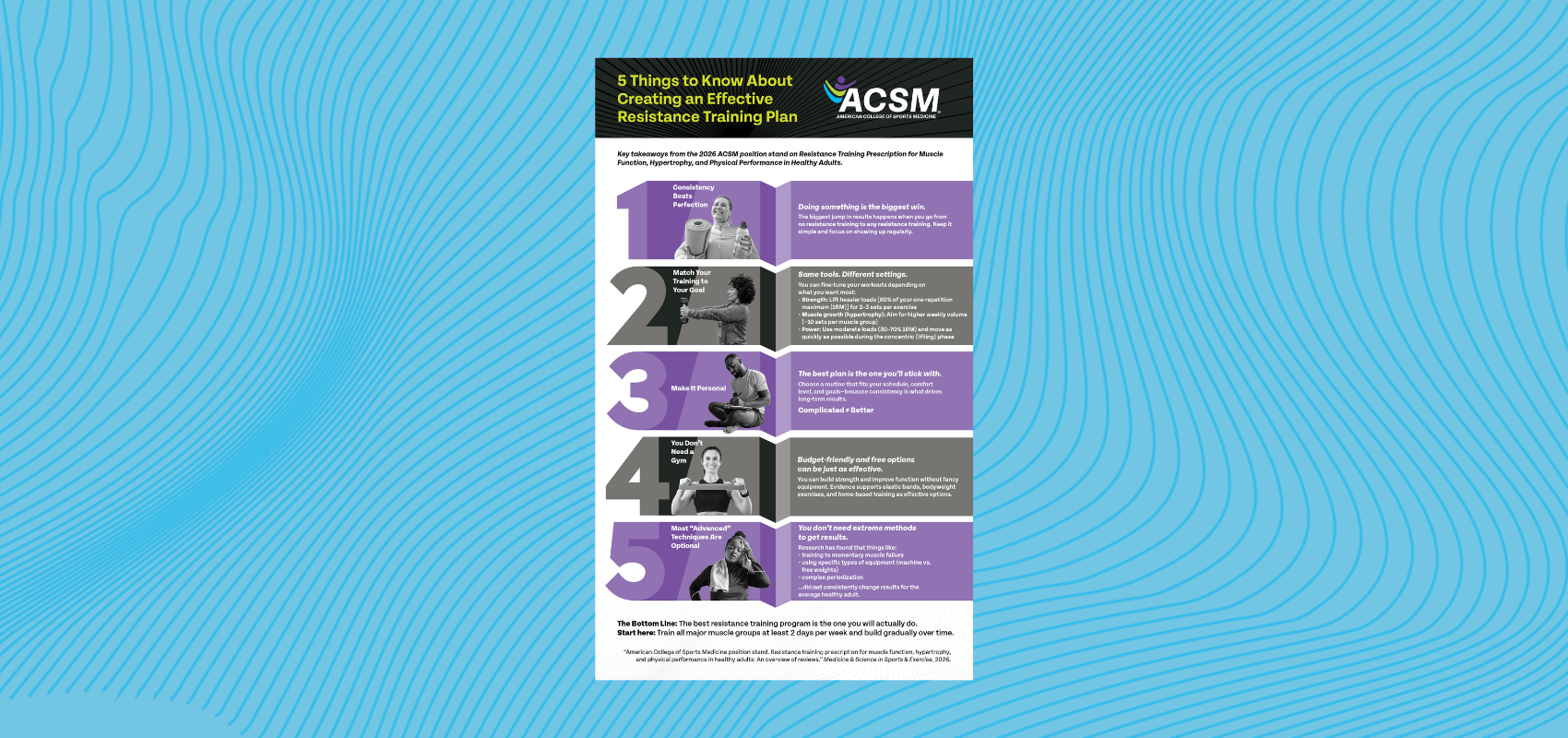
| Key Takeaways ✓ The ACSM's first major update in 17 years analyzed 137 systematic reviews covering 30,000+ participants. ✓ Lifting twice a week hits the sweet spot - adding a third day helps, but not dramatically. ✓ Hypertrophy happens across a much wider rep range than previously taught (roughly 5-30 reps), as long as you train close to failure. ✓ For strength gains, you still need to train heavy - lighter weights build muscle but do not raise your one-rep max meaningfully. ✓ Equipment type (barbells, dumbbells, bands, machines) matters far less than effort and consistency. ✓ Power training - moving moderate loads with speed and intention - becomes increasingly important after age 50 for fall prevention and functional independence. ✓ For men on TRT, these guidelines align well with the anabolic environment testosterone creates, making adherence to at least two sessions per week a high-return investment. |
If you have ever spent 20 minutes scrolling social media looking for a definitive answer on how many sets, reps, and days per week you actually need to build muscle, you already know the problem. Everyone has a system. Everyone's system is the 'optimal' one. And the recommendations change every six months. The 2026 American College of Sports Medicine (ACSM) Position Stand on resistance training cuts through that noise with the most comprehensive evidence review ever conducted on the topic - and the conclusions are surprisingly liberating.The Position Stand, published in the April 2026 issue of Medicine and Science in Sports and Exercise, synthesized 137 systematic reviews representing more than 30,000 participants. The senior author, Dr. Stuart Phillips of McMaster University, described the core message simply: the best resistance training program is the one you will actually stick with.
For men on testosterone replacement therapy (TRT), this update is particularly relevant. TRT creates an enhanced anabolic environment that amplifies the muscle-building response to resistance training. Getting the training right - or at least good enough and consistent - translates directly into better body composition, insulin sensitivity, strength, and long-term function. This article breaks down the key findings and explains what they mean for your training.
Why Did the ACSM Update Its Guidelines After 17 Years?
The previous ACSM resistance training position stand was published in 2009. Since then, the science has expanded dramatically. A search of the literature reveals thousands of studies on resistance training and human physiology published in the years since that original document. More importantly, several widely held assumptions from 2009 - about rep ranges, periodization, and equipment - have been challenged or refined.The 2026 update was conducted as an overview of systematic reviews rather than a study-by-study meta-analysis. That means the researchers evaluated the highest tier of evidence: reviews that had already synthesized individual studies. With six expert reviewers and 137 qualifying systematic reviews, this is the most rigorous treatment of resistance training science ever assembled into a clinical guideline.
Dr. Phillips also acknowledged the social media context: a proliferation of influencers selling complex programs has made it harder for ordinary people to identify what the actual evidence supports. Guidelines grounded in systematic review help separate signal from noise.
How Many Days Per Week Do You Actually Need to Train?
This is the question most men get stuck on. The Position Stand provides a clear, evidence-based ladder:• One session per week is dramatically better than zero. If that is all you can manage, do it.
• Two sessions per week produces substantially better results than one session. This is the minimum most men should target.
• Three sessions per week is better than two, but the added benefit is modest enough that it should not be treated as mandatory.
Dr. Phillips put it bluntly: you get a lot of the benefit by going from once to twice a week. The incremental return from a third session exists, but it is not the leap that going from zero to one session represents.
For men on TRT managing busy schedules, two well-executed full-body training sessions per week - a Tuesday/Thursday split, for example - captures the large majority of the available benefit. You do not need six days in the gym to make meaningful progress.
Does It Matter What Equipment You Use?
According to the Position Stand, the answer is largely no - at least for general health and muscle-building goals. Barbells, dumbbells, cable machines, resistance bands, and even bodyweight movements all produce meaningful gains in strength and muscle mass when performed with sufficient effort.The reason comes down to the fundamental stimulus for hypertrophy: mechanical tension on the muscle. Whether that tension comes from a loaded barbell or a resistance band pulling against your arm, the muscle experiences it the same way. Equipment specificity matters at the elite level - if you want to compete in powerlifting, you need to practice with a barbell. But for the men in the ExcelMale community who want to optimize body composition and functional strength on TRT, the message is freeing. Use what you have access to and actually enjoy.
Dr. Phillips cited the work of fitness coach Sheryl Coulombe, who has helped hundreds of women transform their physiques using only a small set of dumbbells at home. The principle transfers equally to men. Lowering the barrier to entry - skipping the commute to the gym on a hectic week and doing a session at home with bands - beats skipping the session entirely.
What Is the Right Rep Range for Building Muscle?
This is where the 2026 Position Stand represents the clearest departure from older dogma. The traditional recommendation - 8 to 12 reps for hypertrophy - is not wrong, but it is far too narrow.The evidence now supports hypertrophy across a much broader rep range, from roughly 5 reps at the heavier end up to 25 to 30 reps with lighter loads - provided you train close to muscular failure. The caveat is important. You do not have to reach absolute failure on every set, but you need to work within a few reps of it. If you can easily do 5 more reps at the end of your set, you likely have not provided sufficient stimulus.
Dr. Phillips described it as a proximity-to-fatigue model. The specific rep count matters less than how hard you are working relative to your limit. Someone doing 20 reps with a lighter weight, stopping when they could only manage 1 or 2 more, is providing a comparable hypertrophic stimulus to someone doing 8 reps with a heavier weight near the same relative effort.
| Goal | Load (% of 1RM) | Reps | Key Point |
| Maximal Strength | 85%+ | 2-5 | Must train with heavy loads to practice and improve the skill of lifting heavy |
| Hypertrophy (Muscle Size) | 40-85% | 5-30+ | Wide range works - the critical variable is proximity to failure, not the exact rep count |
| Muscular Endurance | Below 50% | 20-50+ | Higher rep ranges with lighter loads; builds endurance but less strength transfer |
| Power | 20-70% | 3-8 (fast) | Moderate loads moved with intentional speed and explosiveness during the concentric phase |
Do You Need to Lift Heavy to Get Stronger?
Yes - and this is one point where the updated guidelines do not soften the message.Hypertrophy (muscle size) can occur across a wide rep range. Strength - specifically the ability to lift heavier maximum loads - requires practicing heavier loads. The reason is partly neurological. Strength is a skill. Your nervous system learns to coordinate motor unit recruitment and firing patterns to move heavy weight. If you train exclusively with lighter loads, you do not practice that skill.
Dr. Phillips used a simple analogy: if you lift at 20 repetitions using 60 percent of your one-rep max, you are nowhere near practicing that maximum. You will get bigger muscles that are less efficient at expressing maximum force. If your goal is a stronger max deadlift or squat, heavier training is not optional.
For men on TRT, this distinction matters. Many men join the ExcelMale community specifically to improve body composition - adding muscle and reducing fat. Hypertrophy-focused training with moderate to heavier loads (roughly 65-80% of your one-rep max) hits both goals: sufficient load to drive strength adaptation and enough volume to drive muscle growth. You do not need to exclusively powerlift, but periodically pushing into the heavier rep ranges (5-8 reps near failure) keeps your strength progressing alongside your size.
Why Does Power Training Matter More as Men Age?
One meaningful addition in the 2026 guidelines is expanded attention to power training. Power is the ability to produce force quickly - and it declines faster with age than either strength or muscle mass. This has direct consequences for functional independence and fall risk.Getting up from a chair is a power movement. Catching yourself when you slip on ice is a power movement. Correcting a stumble before it becomes a fall requires fast, coordinated muscle activation that neither slow, heavy lifting nor light endurance work specifically trains.
The Position Stand supports power development with relatively light to moderate loads (20 to 70 percent of your one-rep max) moved with intentional speed during the concentric (lifting) phase. The coaching cue is to move the weight as fast as you can with control - not to reduce the load dramatically, but to think about speed of movement on the way up. This intention matters even if the bar does not actually move quickly.
For men on TRT in their 40s and beyond, adding one or two sets of explosive-intent movements - a fast goblet squat, a push press, a controlled box step-up at speed - to your regular training provides a meaningful functional return that heavy grinding sets alone do not.
How Does TRT Change the Equation for Resistance Training?
The ACSM Position Stand applies to all healthy adults regardless of hormone status, but testosterone is the primary anabolic driver of muscle protein synthesis. Men on TRT operate in a sustained androgenic environment that amplifies the response to resistance training stimuli.In practical terms, this means:
• Recovery is enhanced. Testosterone accelerates muscle protein synthesis and reduces recovery time between sessions. Men on TRT may tolerate - and benefit from - more volume than their untreated peers.
• Hypertrophic response is amplified. The combination of resistance training-induced mechanical tension with testosterone-driven protein synthesis creates a synergistic effect. The same workout produces more muscle in an optimized hormonal environment.
• Body composition responds faster. Testosterone supports fat oxidation while promoting lean mass retention. Consistent resistance training reinforces both of these effects simultaneously.
• Protein requirements may be higher. To fully capitalize on the anabolic environment TRT creates, aim for 1.6 to 2.2 grams of protein per kilogram of bodyweight per day. This supports both muscle repair and growth across training sessions.
One insight from ExcelMale community discussions: men who start TRT and immediately add consistent resistance training report significantly better outcomes than those who start the therapy alone. The therapy creates the hormonal environment; training is what the body uses that environment to build.
What About Sets Per Muscle Group?
The Position Stand points to 10 to 12 working sets per muscle group per week as the zone where hypertrophic returns begin to flatten for most people. This does not mean more volume produces no benefit - it can, particularly for advanced trainees - but it is the range where most men get the most return per unit of effort.In practice, that might look like:
• Chest: 3 sets of incline press + 2 sets of cable fly = 5 sets per session x 2 sessions = 10 sets per week
• Back: 3 sets of pull-downs + 3 sets of rows per session = 6 sets x 2 = 12 sets per week
• Legs: 3 sets of squats + 2 sets of Romanian deadlifts per session = 5 x 2 = 10 sets per week
For men short on time, Dr. Phillips noted that circuit-style training - moving from one muscle group to the next with minimal rest between exercises - can compress this volume into a 20-30 minute session while maintaining an elevated heart rate. The cardiovascular benefit is a bonus. You do not need 90-minute workouts to hit adequate volume.
Does Periodization Actually Matter?
This is where the 2026 guidelines generated some controversy. The Position Stand found insufficient evidence to conclusively demonstrate that periodized programs (those that systematically vary volume and intensity over planned cycles) produce superior results compared to non-periodized programs for general healthy adults.This is not a claim that periodization is useless. For competitive athletes timing a performance peak, or for men who have been training seriously for years, structured programming almost certainly helps. What the evidence could not cleanly show is that periodization is meaningfully superior for the average healthy adult focused on general strength and muscle-building goals.
The practical implication for the ExcelMale community: if the complexity of a formal periodization block is the thing standing between you and actually training, skip it. Show up, train hard, train consistently, and progress your loads over time. The fundamentals beat the complexity.
Frequently Asked Questions
Can I build muscle on just two training sessions per week?
Yes. The evidence clearly supports meaningful hypertrophy and strength gains on two sessions per week, provided you train with sufficient effort and volume across those sessions. Two hard, full-body sessions per week consistently beat one or zero sessions per week on every measure the Position Stand evaluated.Do I need to go to failure on every set?
No. The Position Stand supports training to within 1 to 3 repetitions of failure - close enough to provide the stimulus, without the injury risk and recovery burden of routine all-out failure. Stopping when you genuinely cannot complete another clean repetition is fine occasionally, but it does not need to be the default.How does my TRT dose affect my ability to build muscle?
Testosterone within a physiological range - roughly 400 to 1,000 ng/dL - supports baseline protein synthesis and recovery. The landmark Bhasin dose-response research demonstrated that supraphysiological doses produce dose-dependent increases in muscle mass. However, men optimized in the normal clinical range still benefit substantially from resistance training, and the combination of adequate testosterone plus consistent training outperforms either alone. Work with your provider to ensure your levels are truly optimized, not just technically within range.Is there a minimum effective dose of resistance training for maintaining muscle?
The muscle memory research suggests one session per week is sufficient to maintain strength and muscle mass for at least 12 weeks during planned breaks. For active building rather than maintenance, two sessions per week is the evidence-based minimum. Importantly, even one session beats none for preserving the gains you have already built.Does eccentric training add anything worth pursuing?
The evidence shows a modest additional hypertrophic benefit from eccentric-biased training (the lowering phase of a lift, particularly when the load exceeds what you could lift concentrically). However, eccentric overload carries a higher injury and recovery cost, and the Position Stand does not recommend it as a standard approach for general trainees. For most men on TRT pursuing health and body composition, standard full-range training close to failure produces excellent results without the added risk.Related ExcelMale Forum Discussions
The Weight Training Myths That Science Just Put to Rest - ExcelMale moderated thread covering the Docs Who Lift podcast discussion of the 2026 ACSM Position Stand, with Dr. Stuart Phillips.The Weight Training Myths That Science Just Put to Rest - ExcelMale - #1 TRT & Testosterone Forum | Expert-Moderated Men's Health Community
Muscle Memory Is Real: What the Latest Science Says About Training Breaks - Nelson Vergel's article reviewing four 2024-2025 studies on muscle memory, detraining, and what the minimum training dose is to maintain your gains.
Muscle Memory Is Real: What the Latest Science Says About Training Breaks, Retraining, and Your Long-Term Gains - ExcelMale - #1 TRT & Testosterone Forum | Expert-Moderated Men's Health Community
Why Exercise Is the Secret to Muscle Growth and Longevity - Forum thread and video with Dr. Stuart Phillips discussing protein requirements, the 'brick wall' model of muscle turnover, and how TRT interacts with training.
Why Exercise is the Secret to Muscle Growth and Longevity - ExcelMale - #1 TRT & Testosterone Forum | Expert-Moderated Men's Health Community
What Is the Testosterone Dose for Muscle Gain? - Community discussion on TRT dosing and its relationship to resistance training outcomes, including reference to the Bhasin dose-response study.
Testosterone Dose for Muscle Gain: mg/week Chart + Research - ExcelMale - #1 TRT & Testosterone Forum | Expert-Moderated Men's Health Community
TRT and GLP-1 Medications: Resistance Training as the Essential Third Pillar - Covers why 2-4 resistance training sessions weekly are particularly critical for men combining testosterone therapy with semaglutide or tirzepatide to preserve lean mass.
TRT and GLP-1 Medications: What Men Need to Know About Combining Testosterone Therapy with Semaglutide and Tirzepatide - ExcelMale - #1 TRT & Testosterone Forum | Expert-Moderated Men's Health Community
Key References
1. Currier BS, D'Souza AC, Phillips SM, et al. American College of Sports Medicine Position Stand: Resistance Training Prescription for Muscle Function, Hypertrophy, and Physical Performance in Healthy Adults. Medicine and Science in Sports and Exercise. 2026;58(4):851-872. doi:10.1249/MSS.0000000000003897. American College of Sports Medicine Position Stand. Resistance Training Prescription for Muscle Function, Hypertrophy, and Physical Performance in Healthy Adults: An Overview of Reviews - PubMed2. Schoenfeld BJ, Grgic J, Van Every DW, Plotkin DL. Loading Recommendations for Muscle Strength, Hypertrophy, and Local Endurance: A Re-Examination of the Repetition Continuum. Sports. 2021;9(2):32. doi:10.3390/sports9020032. Loading Recommendations for Muscle Strength, Hypertrophy, and Local Endurance: A Re-Examination of the Repetition Continuum - PubMed
3. Bhasin S, Woodhouse L, Casaburi R, et al. Testosterone dose-response relationships in healthy young men. American Journal of Physiology - Endocrinology and Metabolism. 2001;281(6):E1172-E1181. doi:10.1152/ajpendo.2001.281.6.E1172. Testosterone dose-response relationships in healthy young men - PubMed
4. Halonen EB, Mikkola I, Ihalainen JK, et al. Short-term resistance training periodization does not compromise long-term adaptation in healthy adults. Scandinavian Journal of Medicine and Science in Sports. 2024. doi:10.1111/sms.14530. Skin homeostasis: Mechanism and influencing factors - PubMed
5. Seaborne RA, Strauss J, Brown M, et al. Human Skeletal Muscle Possesses an Epigenetic Memory of Hypertrophy. Scientific Reports. 2018;8(1):1898. doi:10.1038/s41598-018-20287-3. Human Skeletal Muscle Possesses an Epigenetic Memory of Hypertrophy - PubMed
6. Schoenfeld BJ, Grgic J. No Time to Lift? Designing Time-Efficient Training Programs for Strength and Hypertrophy: A Narrative Review. Sports Medicine. 2022;52(10):2327-2340. doi:10.1007/s40279-022-01690-1. The MicroClimate Screen - A microscale climate exposure system for assessing the effect of CO2, temperature and UV on marine microalgae - PubMed
7. Kraemer WJ, Ratamess NA. Fundamentals of resistance training: progression and exercise prescription. Medicine and Science in Sports and Exercise. 2004;36(4):674-688. doi:10.1249/01.MSS.0000121945.36635.61. Fundamentals of resistance training: progression and exercise prescription - PubMed
8. Morton RW, Murphy KT, McKellar SR, et al. A systematic review, meta-analysis and meta-regression of the effect of protein supplementation on resistance training-induced gains in muscle mass and strength in healthy adults. British Journal of Sports Medicine. 2018;52(6):376-384. doi:10.1136/bjsports-2017-097608. A systematic review, meta-analysis and meta-regression of the effect of protein supplementation on resistance training-induced gains in muscle mass and strength in healthy adults - PubMed
9. Straight T, Brady AO, Evans EM, et al. Power training in older adults: systematic review and evidence based recommendations. Journal of Aging and Physical Activity. 2020;28(3):410-426. doi:10.1123/japa.2019-0067. Biometry impairments: the specific challenges in preventing pressure ulcers in patients with chronic spasticity - PubMed
10. Kvorning T, Andersen M, Brixen K, Madsen K. Suppression of endogenous testosterone production attenuates the response to strength training: a randomized, placebo-controlled, and blinded intervention study. American Journal of Physiology - Endocrinology and Metabolism. 2006;291(6):E1325-E1332. doi:10.1152/ajpendo.00143.2006. Checking your browser - reCAPTCHA
Conclusion: Simple Beats Complex - Especially on TRT
The 2026 ACSM Position Stand is not a revolution. It is a clarification. The evidence says that almost any consistent resistance training program - two days per week, a mix of compound movements, training near failure with whatever equipment you have access to - produces meaningful strength and muscle-building results.For men on TRT, that foundation is even more valuable. Testosterone creates the hormonal environment for accelerated adaptation; resistance training is the signal that tells your body what to do with it. Missing the training while optimizing your protocol is leaving most of the benefit on the table.
Start with two sessions per week if you are not already there. Work the major muscle groups - a push, a pull, and a leg movement each session covers the essentials. Train hard enough that the last two or three reps of each set genuinely challenge you. Add a fast, explosive movement if you are over 45. That is the core of what the evidence supports. Everything else is refinement.
Medical Disclaimer
This article is for educational purposes only and does not constitute medical advice. Always consult a qualified healthcare provider before starting or modifying any exercise program, hormone therapy, or medical treatment.
About ExcelMale.com
ExcelMale.com is the leading online community for men seeking evidence-based information on testosterone replacement therapy, hormone optimization, sexual health, and men's wellness. With 24,000+ members and more than 20 years of expert-moderated discussion, ExcelMale bridges the gap between peer-reviewed research and real-world patient experience. Founded by Nelson Vergel - chemical engineer, long-term TRT patient, and author of Testosterone: A Man's Guide and Beyond Testosterone - ExcelMale remains committed to helping men make informed decisions about their health.
ACSM Unveils Landmark 2026 Resistance Training Guidelines — First Update in 17 Years
Understand the key points of the ACSM Resistance Training Guidelines for effective muscle building and overall fitness improvement.
acsm.org
Last edited by a moderator: