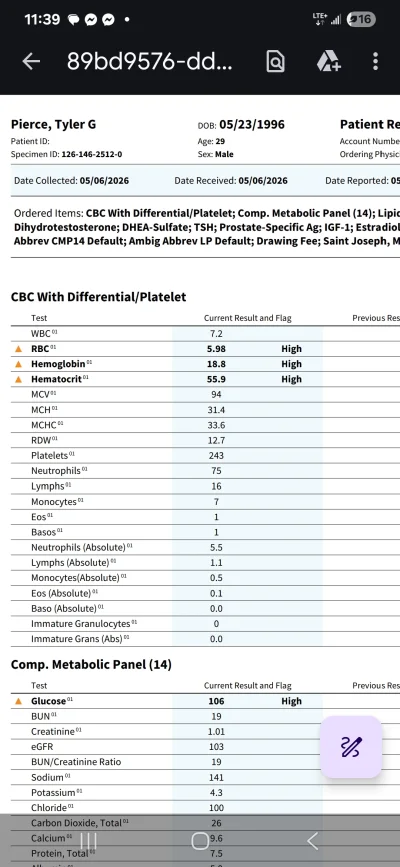
Update. Had a 7 day stretch where I was starting to feel lots better. Had energy to get out of bed and get things done and had a positive outlook. That ended yesterday waking up with anxiety. And this morning, woke up with even more anxiety. Im not really sure where to go from here. My body may still be trying to balance out. Currently 100mg morning and 50mg night on scrotum. Was at 100mg morning and night, but dropped to 50mg nightly 4 days ago to see if it would help with sleep. Now thinking about it, things did go down hill since I lowered the nightly dose. Going to get labs tomorrow and see whats going on
You’ve been advised to stick with a protocol to let your body adjust yet you insist on constantly changing your protocol. And when you get labs tomorrow that will just be a snapshot of that point in time.
You’ve struggled with protocols for over a year then found one where you felt great but it had a negative inspection in your sleep. For one, it’s possible your body would’ve adjusted to the protocol and your sleep quality would’ve improved by itself given time. Secondly, there are other tools to use on various fronts. Your first approach should not be to just adjust dosage, frequency, or application method whenever an issue arises… particularly true for people who have had a hard time finding a good protocol. There are all kinds of things that can assist with sleep, from habits to diet to vitamins/minerals to supplements and other things. Did you try anything else to assist on that front, or did you just say “screw it I’ll drop my dose by 25%”?
One of the things I’ve added recently that seems to have helped with sleep is PS Caps from Life Extension. I very rarely have sleep issues it always resolves within a week or so, so I wasn’t even adding it for that but rather for the cognitive benefits. It’s only been about a week and a half but my sleep has been really good. Even more so than usual and I almost always get 7+ hours any way. Not sure if it would help, but I noticed that along with the cognition it also blunts cortisol, so it may help you on both fronts(anxiety and sleep).
Phosphatidylserine (PS): Sleep, Stress & Cognition Benefits
Phosphatidylserine is a phospholipid naturally found in cell membranes, particularly concentrated in the brain. Here’s what the research shows across three key areas:
SLEEP
Cortisol regulation is the primary sleep mechanism — PS blunts nighttime cortisol spikes that can fragment sleep and cause early waking. Studies suggest it may improve sleep quality and duration, particularly in people whose sleep is disrupted by overtraining or chronic stress. It doesn’t act as a sedative; rather, it supports sleep by calming the HPA (hypothalamic-pituitary-adrenal) axis.
STRESS
PS is one of the few supplements with solid evidence for blunting the cortisol response to physical and psychological stress. A well-cited study found that 400–800 mg/day significantly reduced cortisol and ACTH levels after exercise-induced stress. It also appears to reduce subjective feelings of stress and anxiety, likely through its role in dampening HPA axis overactivation. Athletes use it specifically to prevent overtraining syndrome, which is driven by chronically elevated cortisol.
COGNITION
Memory: PS has FDA-qualified health claim language supporting its role in reducing cognitive decline in the elderly. Multiple trials show improvements in verbal memory, recall, and learning. Attention & focus: Studies in children with ADHD and in healthy adults show improvements in attention, concentration, and processing speed. Age-related decline: PS levels in the brain naturally drop with age. Supplementation appears to partially restore neuronal membrane integrity and neurotransmitter signaling (acetylcholine, dopamine). Neuroplasticity: PS supports nerve growth factor (NGF) activity, which is important for synaptic maintenance and repair.
DOSING
Most studies use 100–300 mg/day for general cognitive support. Higher doses (400–800 mg/day) are used for cortisol/stress blunting. It is generally well-tolerated; soy-derived and sunflower-derived forms are the most common. Effects on cognition tend to build over 4–8 weeks of consistent use. Overall, PS has a stronger evidence base than most nootropics, particularly for stress resilience and memory in aging populations.